
Quick Answer
For an initial custom tin packaging quotation, provide the product use, tin shape, external dimensions, target quantity, printing requirements, destination, and preferred trade term. Final artwork is helpful but is not required for the first quotation.
A factory can normally estimate the project from the size, quantity, printing area, color requirements, and intended use, then identify which structural, sampling, testing, and delivery details need further review.
Minimum Information for an Initial Quote
- Product use
- Tin shape and external dimensions
- Target quantity and number of designs
- Printing area, colors, and preferred finish
- Destination and preferred trade term
1. Basic Information Required for a Tin Box Quote
At a minimum, please provide:
- Tin box shape
- External dimensions
- Target quantity
- Printing requirements
The most common dimension formats are:
- Rectangular tin: Length × Width × Height
- Round tin: Diameter × Height
Millimeters are recommended.
For example:
- Rectangular tin: 150 × 100 × 50 mm
- Round tin: 80 × 60 mm, meaning 80 mm diameter × 60 mm height
External dimensions are normally preferred. If you only know the internal dimensions, the manufacturer can estimate the external dimensions based on the material thickness and structure.
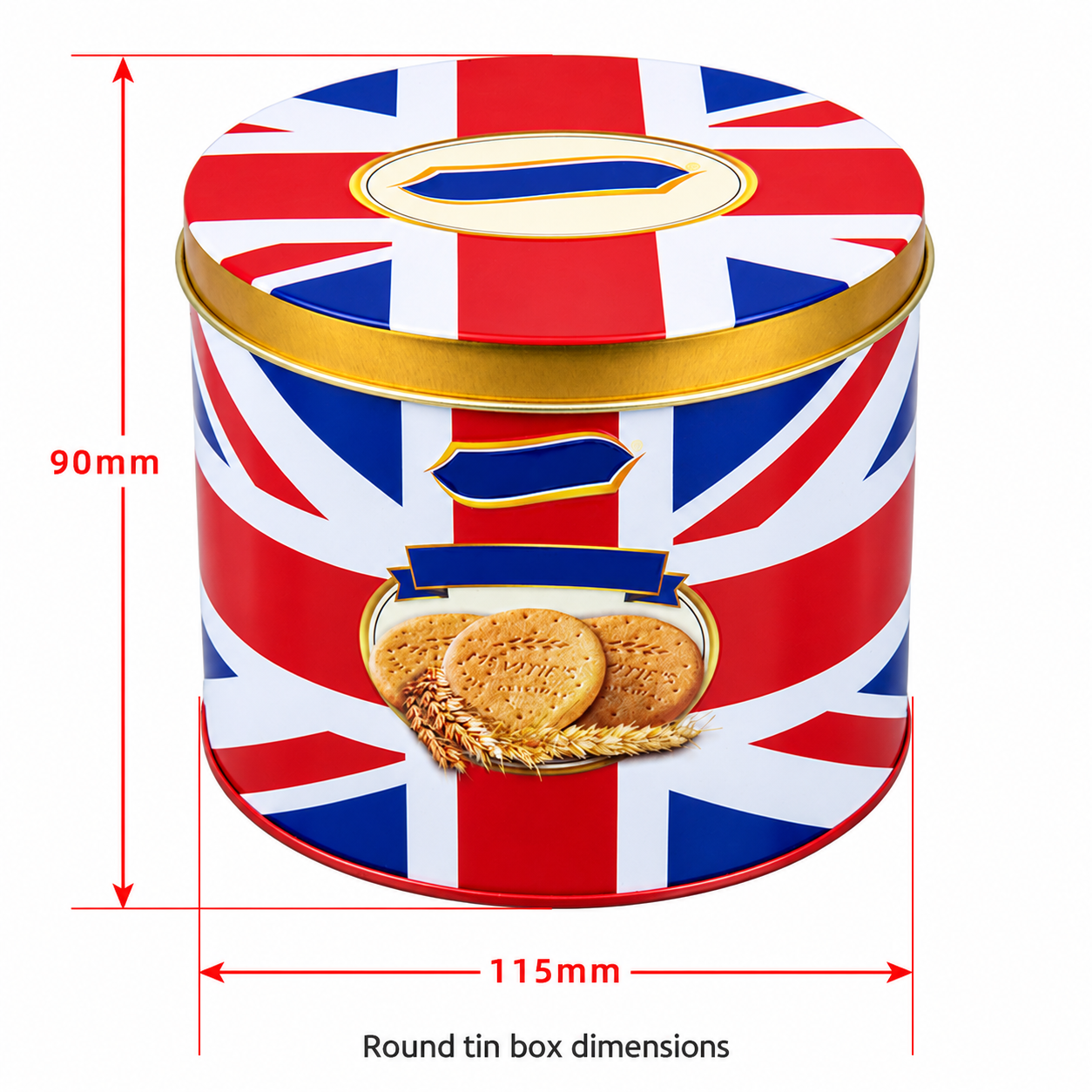
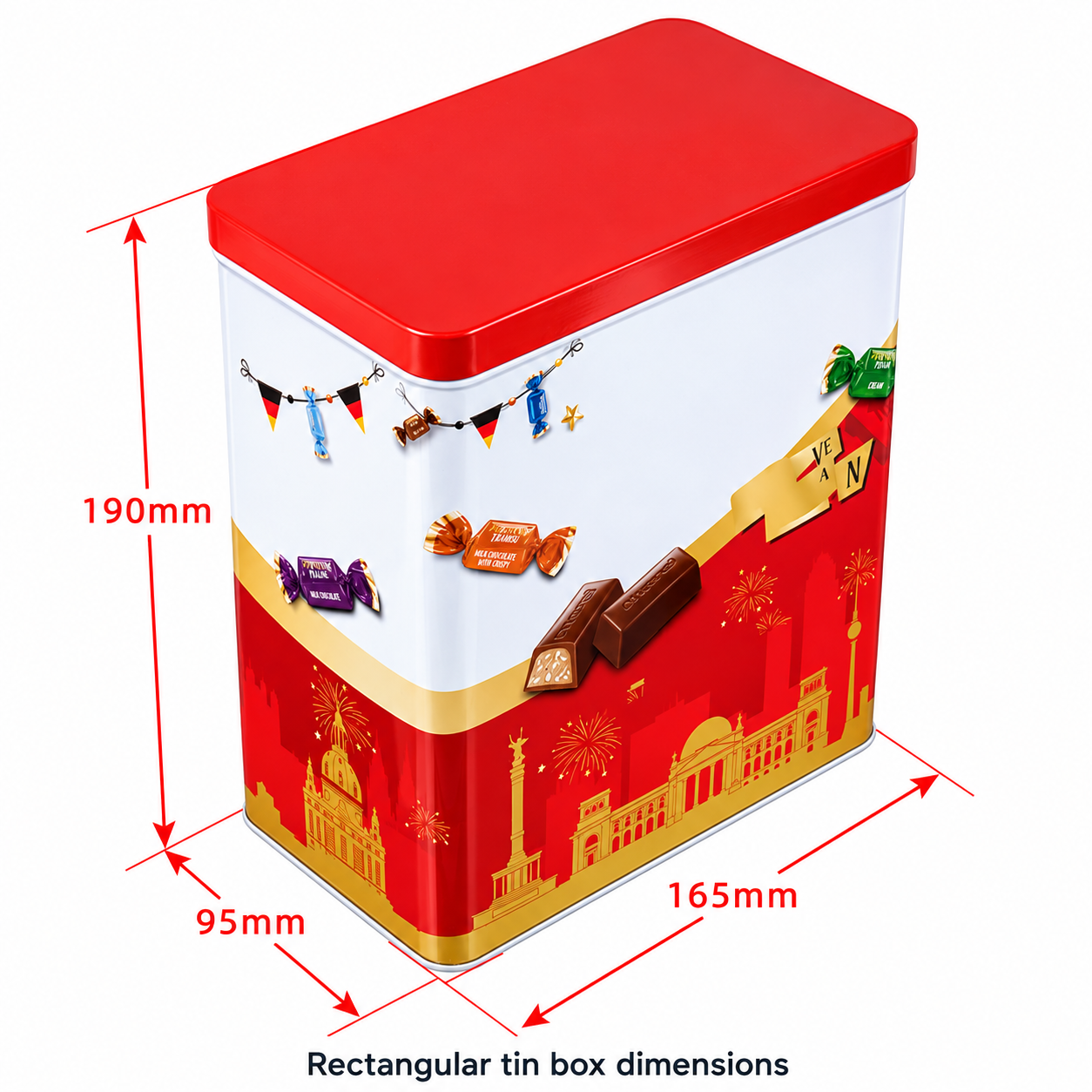
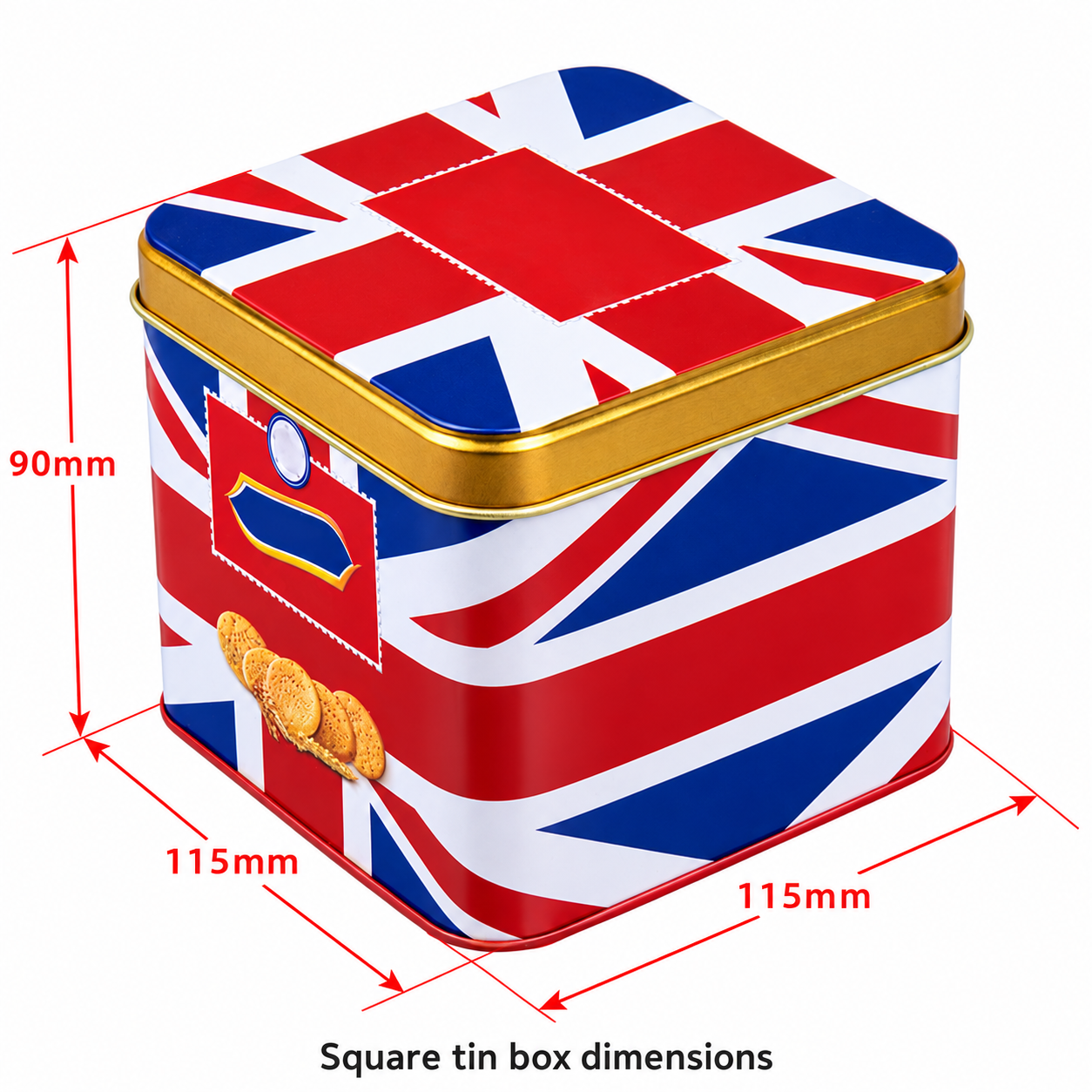
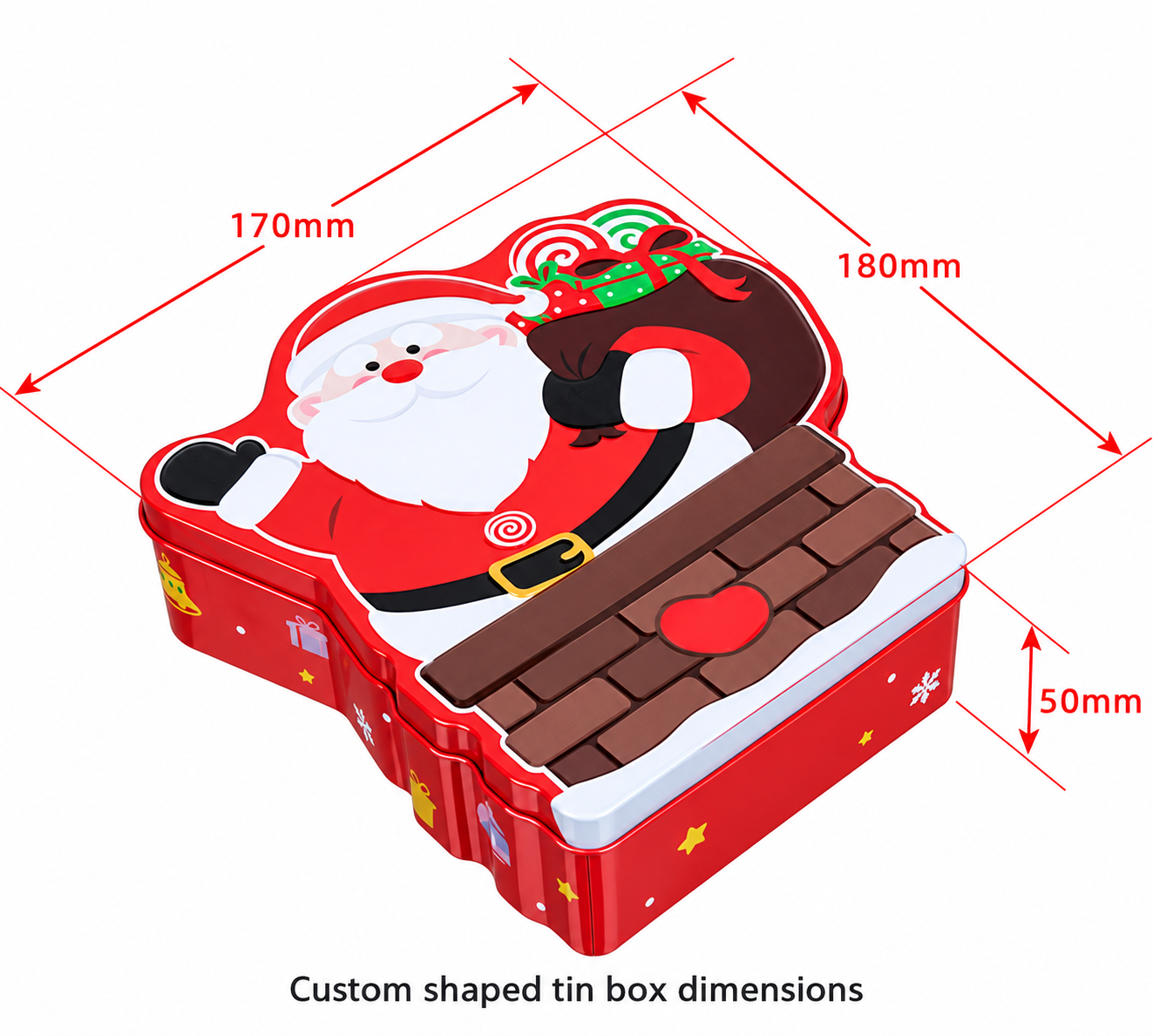
What if you do not know the exact size?
You can provide any of the following:
- Product dimensions
- Product weight
- Approximate filling quantity
- Reference packaging
- Photos
- Sketches
- A physical sample
- The required capacity
The more information you provide, the easier it is for the factory to recommend a suitable structure.
2. Quantity and Number of Designs
The target quantity should be provided before quotation because printing costs are affected by order quantity. For conventional full-color custom printing projects, approximately 3,000 finished tins is a common reference quantity, but the actual MOQ must be confirmed according to the tin structure, printing method, and project requirements. Read more about why 3,000 pieces is a common starting MOQ.
For multiple designs, please specify:
- Total quantity
- Number of designs
- Quantity per design
- Whether all designs use the same size and structure
- Whether all designs use the same printing process
For example:
- Total quantity: 3,000 pieces
- Number of designs: 2
- Quantity per design: 1,500 pieces
- Same tin structure: Yes
- Same printing process: Yes
Two designs with 1,500 pieces each may be produced together when they use the same tin size, structure, and printing process. This allows the designs to be arranged together for printing.
Different printing processes can also be used, but they may require separate setup and printing charges.
Quantity can affect:
- Printing cost
- Tooling cost
- Labor cost
- Packaging cost
- Unit price
- Shipping cost
Annual demand is not required for a normal quotation because tin boxes are usually produced according to each order. However, estimated annual demand can help the factory consider a more automated tooling or production solution for larger projects.
3. Product Use and Destination Market
Before finalizing the structure and materials, the factory should understand what will be placed inside the tin.
The product use may affect:
- Tin dimensions
- Internal coating
- Sealing requirements
- Whether an inner bag is needed
- Packaging method
- Testing requirements
- Destination-market compliance
For food products, please indicate whether the contents are:
- Solid food
- Powder
- Dry food
- Oil-rich food
- Acidic food
- Liquid
Standard decorative tins are generally more suitable for dry products and products with separate inner packaging. If the product is liquid, the tin should normally be used as an outer gift package with an independent inner container or sealed pouch.
For cosmetics, candles, gifts, promotional products, and other non-liquid products, the required structure is usually easier to determine. Any direct-contact requirements should still be disclosed before production.
The destination country should also be provided. Different markets may have different requirements for:
- Food-contact materials
- Product labels
- Packaging
- Testing
- Import documentation
- Transportation
For project-specific material and testing considerations, review our quality control and food-contact requirements guide. A material supplier report is not automatically a finished-product test report for a specific tin.
4. Tin Shape, Structure, and Accessories
You do not need to know the exact technical name of the tin structure. You can send a reference photo, drawing, link, or physical sample.
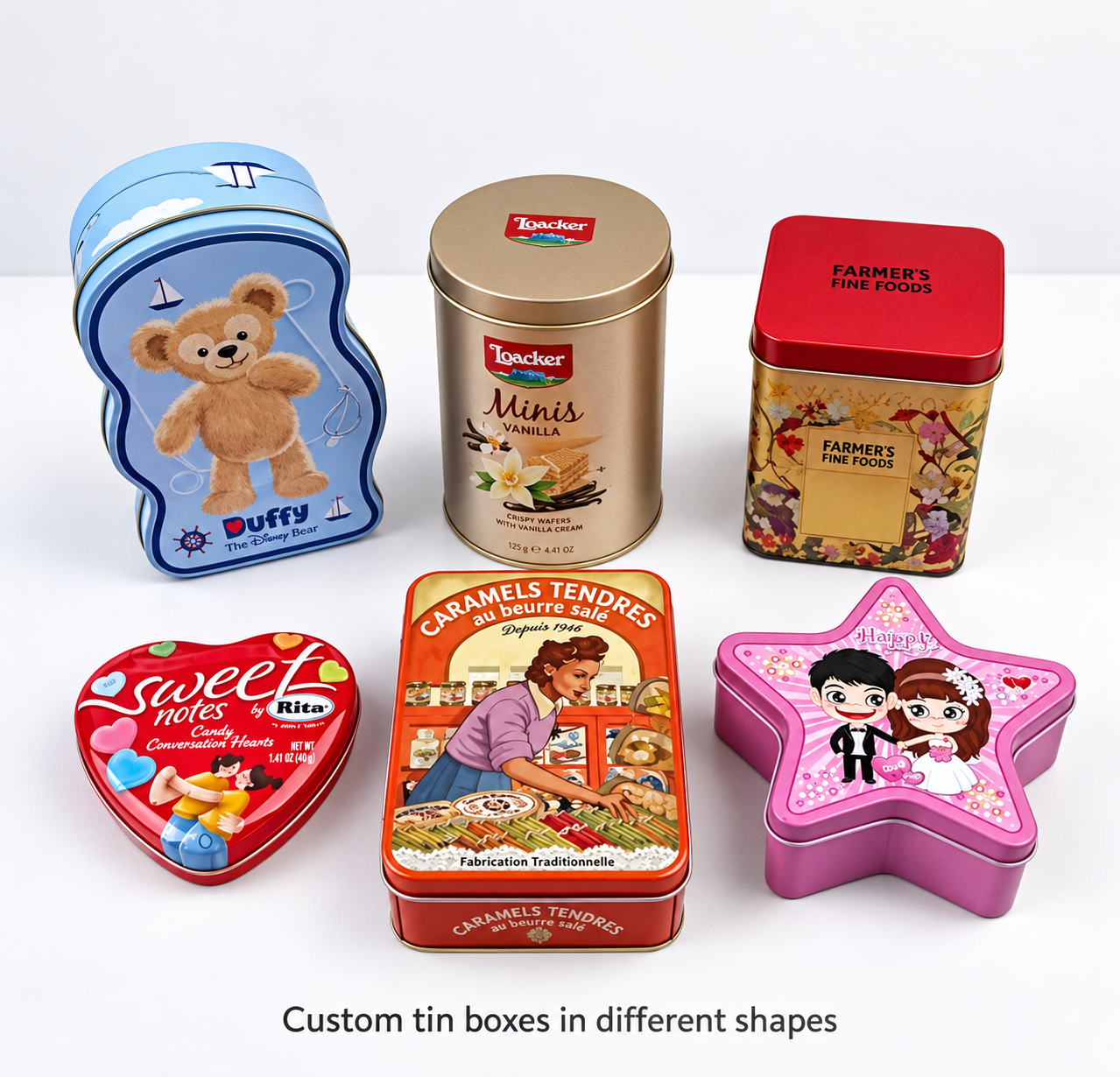
Please describe the required opening method, such as:
- Slip lid
- Hinged lid
- Inner plug lid
- Screw lid
- Sliding lid
- Clasp or latch
- Pull-tab lid
- Other special structures
The following features should be confirmed before quotation:
- Transparent window
- Handle
- Inner tray
- Plastic insert
- Paper insert
- Embossing
- Debossing
- Lock or clasp
- Special hinge
- Custom-shaped body
- Stackable structure
Embossing and debossing affect both tooling and cost. Their position, size, depth, and coverage area should be confirmed before the tooling is prepared.
You should also explain whether the tins need to be:
- Stacked for storage
- Displayed on shelves
- Packed individually
- Shipped in master cartons
- Protected with inner dividers
- Suitable for e-commerce shipping
5. Printing and Artwork Requirements
A complete design file is helpful but not required for the first quotation.
If the artwork is not ready, the factory can usually estimate the price based on:
- Tin dimensions
- Number of colors
- Printing area
- Printing method
- Surface finish
- Special effects
Recommended artwork formats include:
- AI
- EPS
- PSD
- High-resolution images
Low-resolution JPG files and website screenshots are not recommended for production because they may cause:
- Blurred text
- Rough edges
- Pixelated images
- Incorrect proportions
- Poor print quality
Pantone colors and CMYK printing
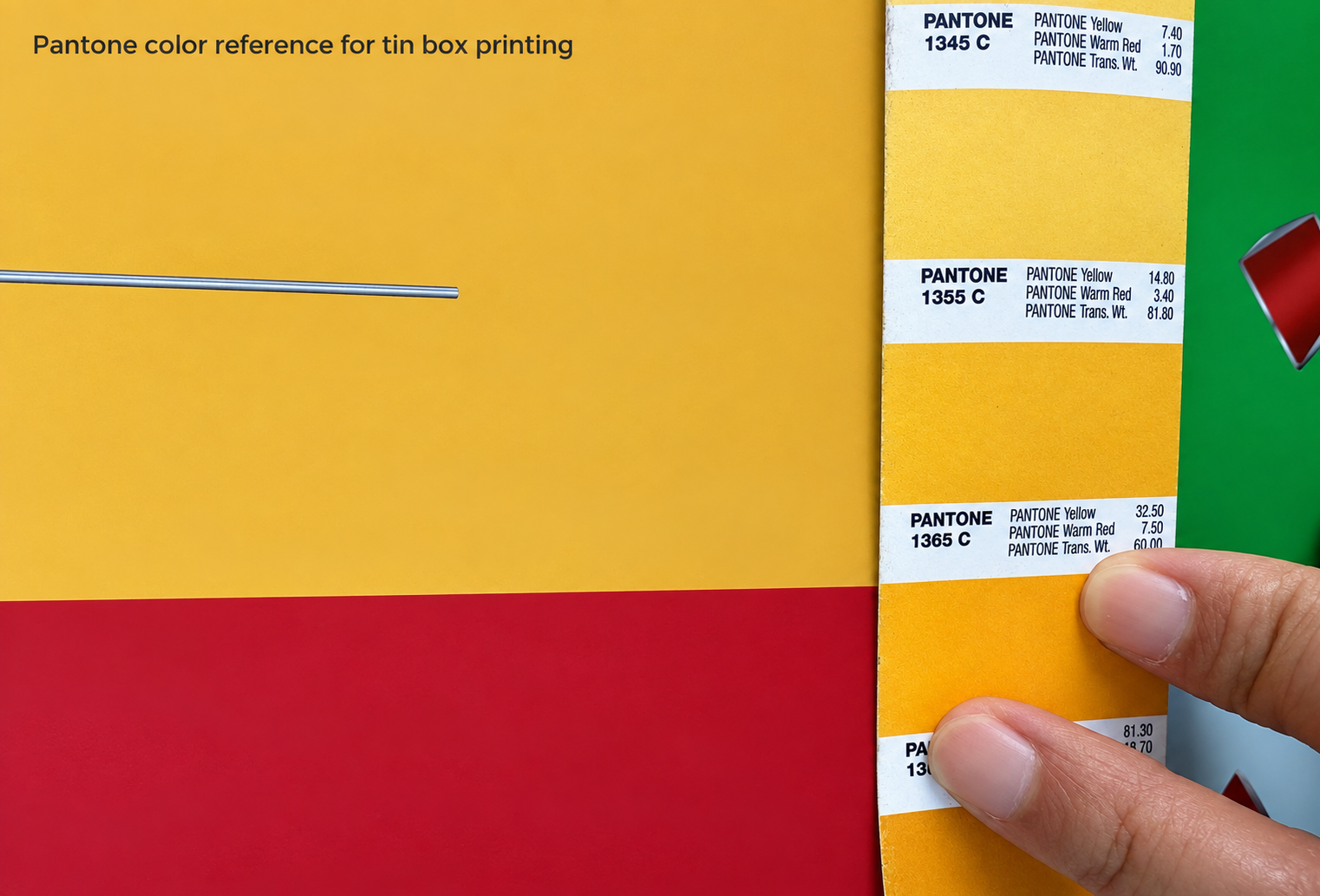
If color accuracy is important, provide the Pantone reference numbers.
Without Pantone colors, the factory may use standard CMYK printing or recommend a visually similar color. The result may be close, but it should not be treated as an exact Pantone match.
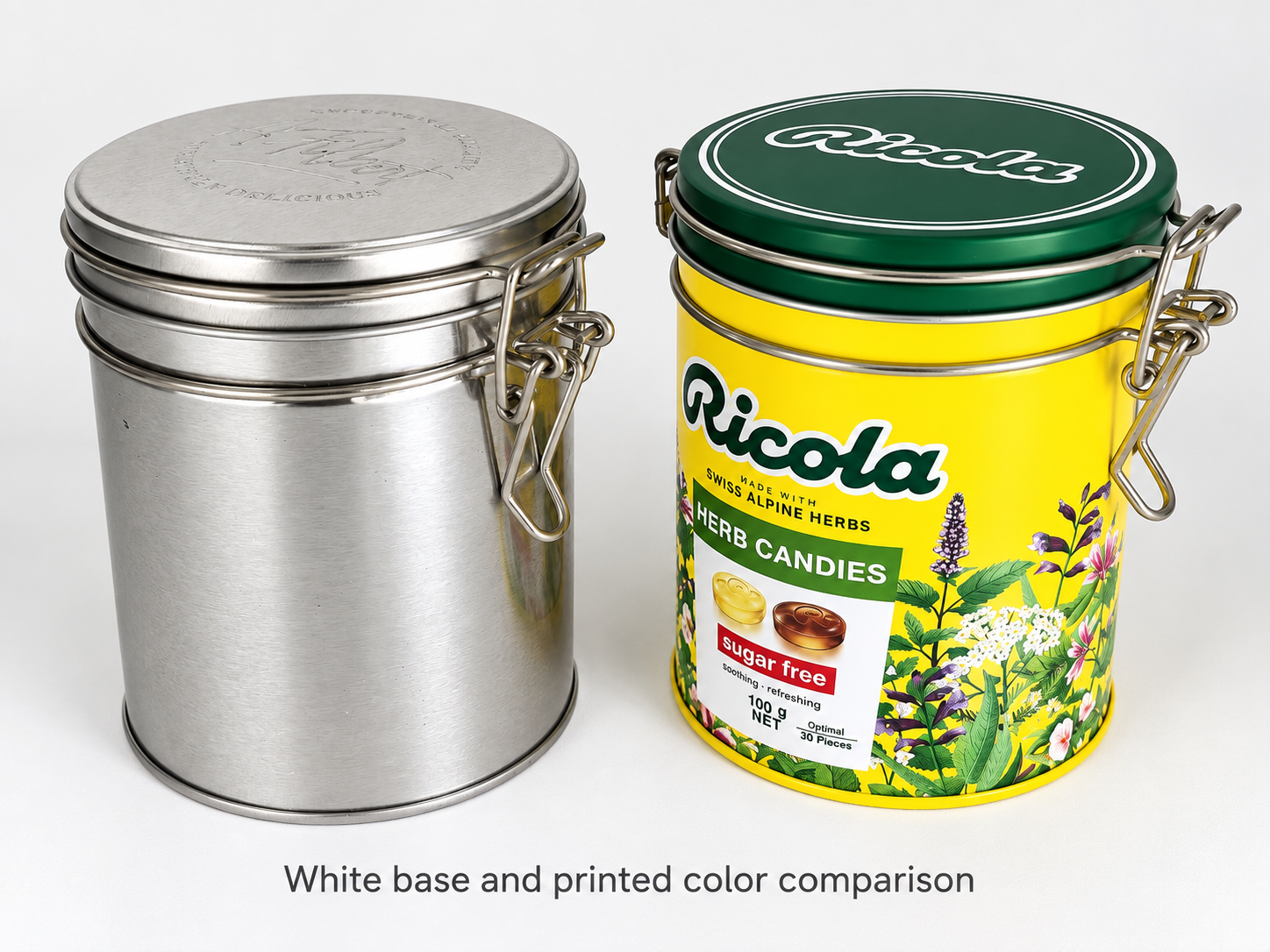
Please also specify the required surface finish:
- Gloss varnish
- Matte varnish
- Pearl finish
- Special textured finish
- Spot gloss
- Exposed tin effect
- Embossed effect
- Other special finishes
Offset printing is the standard method for most full-color tin box orders. For quantities below the normal MOQ, the factory may recommend screen printing or UV printing, depending on the design and required quantity.
The manufacturer should recommend the printing method based on the quantity, artwork, color requirements, and budget. Compare the available options in our tin box printing methods guide.
6. Samples, Quotation, and Trade Terms
Please explain your sample requirements when requesting a quotation.
Existing sample
Used to check the approximate shape, size, and structure. It is usually the fastest and lowest-cost option.
Plain or white tin sample
Used to check the structure without final artwork.
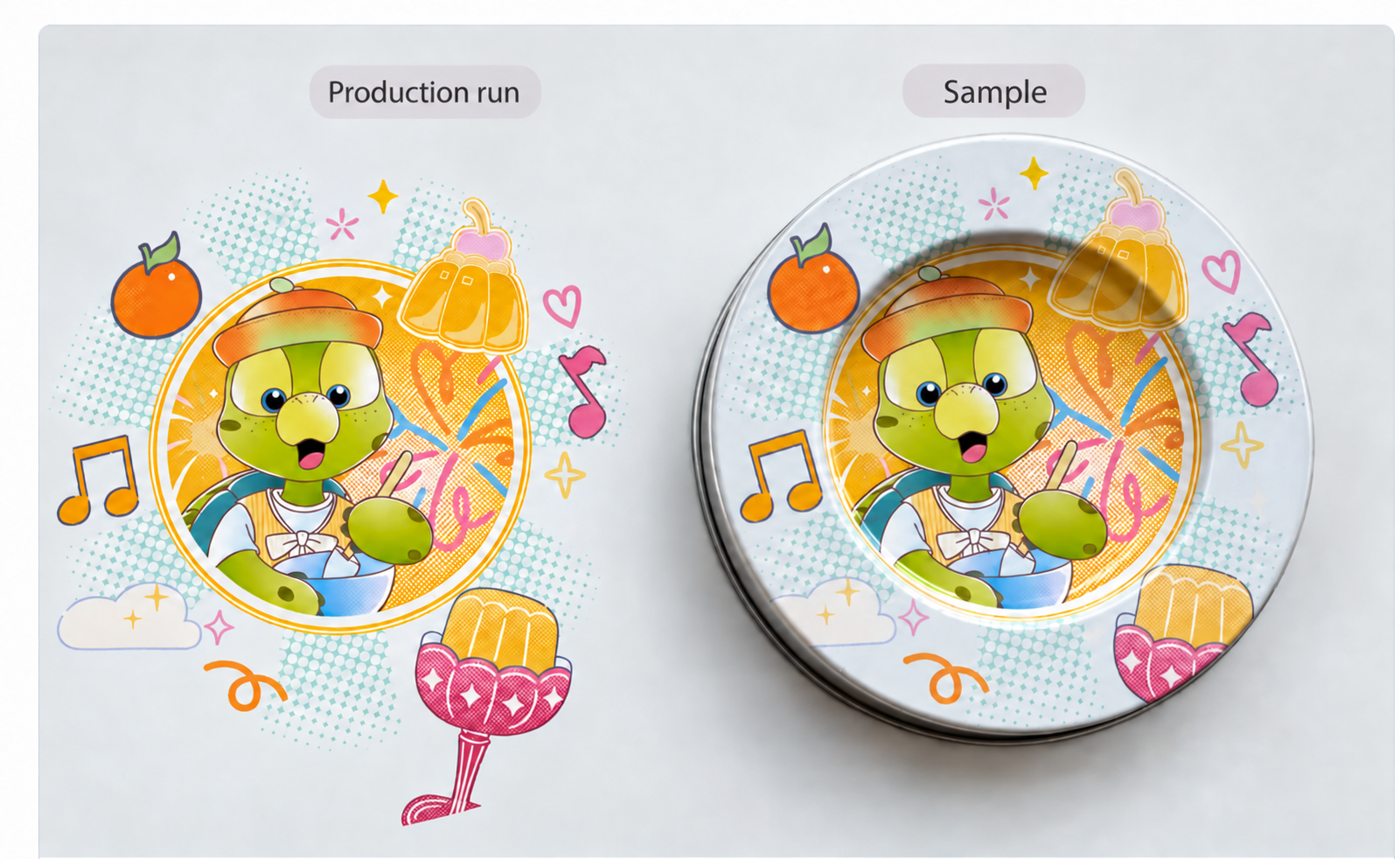
Digital sample
Used to review the general appearance of the design. The color may not be identical to mass production.
Formal printed sample
Produced using the intended production structure, material, and printing process. It provides the most reliable reference before mass production.
Different sample types may have different costs and lead times. A factory should confirm these details separately.
A quotation may include:
- Unit price
- Tooling fee
- Printing setup fee
- Sample fee
- Packaging cost
- Shipping cost
- Testing cost, if required
- Other special-process charges
Testing costs are normally quoted separately when a customer requests a specific finished-product test from SGS, Intertek, or another laboratory.
Please also specify the preferred trade term:
- EXW
- FOB
- CIF
- DAP
- DDP
- Other agreed terms
For CIF, provide the destination port.
For DAP or DDP, provide the destination country, postal code, city, and preferably the complete delivery address. Without a clear destination, the factory cannot calculate transportation accurately.
A target delivery date is helpful but is not always required at the first inquiry stage. The factory will normally confirm the realistic schedule after reviewing the structure, tooling, sample, quantity, and shipping method. For production context, see how custom tin boxes are made.
7. Practical RFQ Template
You can copy and complete the following template when contacting a tin box manufacturer.
Custom Tin Packaging RFQ
- Product use:
- For example: cookies, tea, coffee, cosmetics, candles, gifts, promotional products
- Tin shape:
- Round, rectangular, square, heart-shaped, custom-shaped, or other
- External dimensions:
- Length × Width × Height, or Diameter × Height
Unit: mm - Internal dimensions, if known:
- Length × Width × Height, or Diameter × Height
- Target quantity:
- ________ pieces
- Number of designs:
- ________ designs
- Quantity per design:
- ________ pieces per design
- Tin structure:
- Slip lid, hinged lid, inner plug lid, screw lid, sliding lid, clasp, or other
- Printing method:
- Offset printing, screen printing, UV printing, or to be recommended
- Printing area:
- Lid only, lid and body, all four sides, full coverage, or other
- Pantone colors:
- Pantone numbers, CMYK, or colors to be recommended
- Surface finish:
- Gloss, matte, pearl, spot gloss, textured finish, or other
- Accessories:
- Window, handle, insert, tray, clasp, embossing, debossing, or other
- Food-contact requirements:
- Direct contact or separate inner packaging
Applicable market or testing requirements, if any - Sample requirement:
- Existing sample, plain sample, digital sample, or formal printed sample
- Destination:
- Country, city, postal code, port, or complete delivery address
- Trade term:
- EXW, FOB, CIF, DAP, DDP, or other
- Target delivery date:
- ________
- Artwork status:
- Artwork ready, artwork in progress, or no artwork yet
- Reference files:
- Photos, drawings, product samples, dielines, or links
8. Required Information and Information That Can Be Added Later
The following information is normally required for an initial quotation:
- Tin shape
- Dimensions
- Target quantity
- Printing requirements
The following information can often be confirmed later:
- Final artwork
- Exact Pantone references
- Final surface finish
- Sample type
- Packaging details
- Testing requirements
- Final delivery schedule
However, special structures, food-contact requirements, accessories, and destination-market requirements should be disclosed as early as possible. Adding them after the quotation may change the tooling, unit price, production schedule, or shipping cost.
9. How Quickly Can a Factory Reply?
If the RFQ includes the basic shape, dimensions, quantity, and printing requirements, a factory can usually provide an initial quotation on the same working day.
If the inquiry is received outside working hours or there is a significant time-zone difference, the reply may take one additional working day.
More complex projects involving custom tooling, special structures, multiple components, testing, or special shipping terms may require additional time.
Conclusion
A strong RFQ does not need to contain every final production detail. However, it should provide enough information for the factory to understand the product, estimate the manufacturing process, and calculate the main costs.
At minimum, provide:
- Product use
- Tin shape
- Dimensions
- Target quantity
- Printing requirements
- Destination and preferred trade term
The more complete the initial information is, the fewer clarification rounds will be needed and the more reliable the quotation will be.
Frequently Asked Questions
Can I request a quote before the artwork is ready?
Yes. An initial quotation can usually be prepared from the tin dimensions, quantity, printing area, color requirements, product use, and destination. Final artwork and finishes can be confirmed later.
What dimensions should I provide?
External dimensions in millimeters are normally preferred. Use Length × Width × Height for rectangular tins and Diameter × Height for round tins.
Can a decorative tin hold liquid directly?
Standard decorative tins are not automatically liquid-tight. Liquid products normally require an independent inner container or sealed pouch, with the tin used as the outer gift package.
What information is needed for DDP shipping?
Provide the destination country, city, postal code, and complete delivery address so the transport requirements can be reviewed accurately.
Does a supplier material report certify the finished tin?
No. A supplier report covers the stated material or coating and is not automatically a finished-product test report for a specific custom tin box.
PROJECT REVIEW
Send HYTINPACK Your Custom Tin Packaging RFQ
Share your product use, tin shape, dimensions, quantity, artwork status, printing requirements, destination, and preferred trade term. You can also upload artwork or reference files with the RFQ form.
Submit Your RFQBrowse more tin packaging resources and guides before preparing your project details.
Content Review
Written by the HYTINPACK Editorial Team
Technically reviewed by the HYTINPACK Production Team
Dongguan Huaiyang Metal Manufacture Co., Ltd.
This guide provides general sourcing and quotation guidance. Final structure, pricing, testing, production, and shipping requirements must be confirmed for the specific project.
